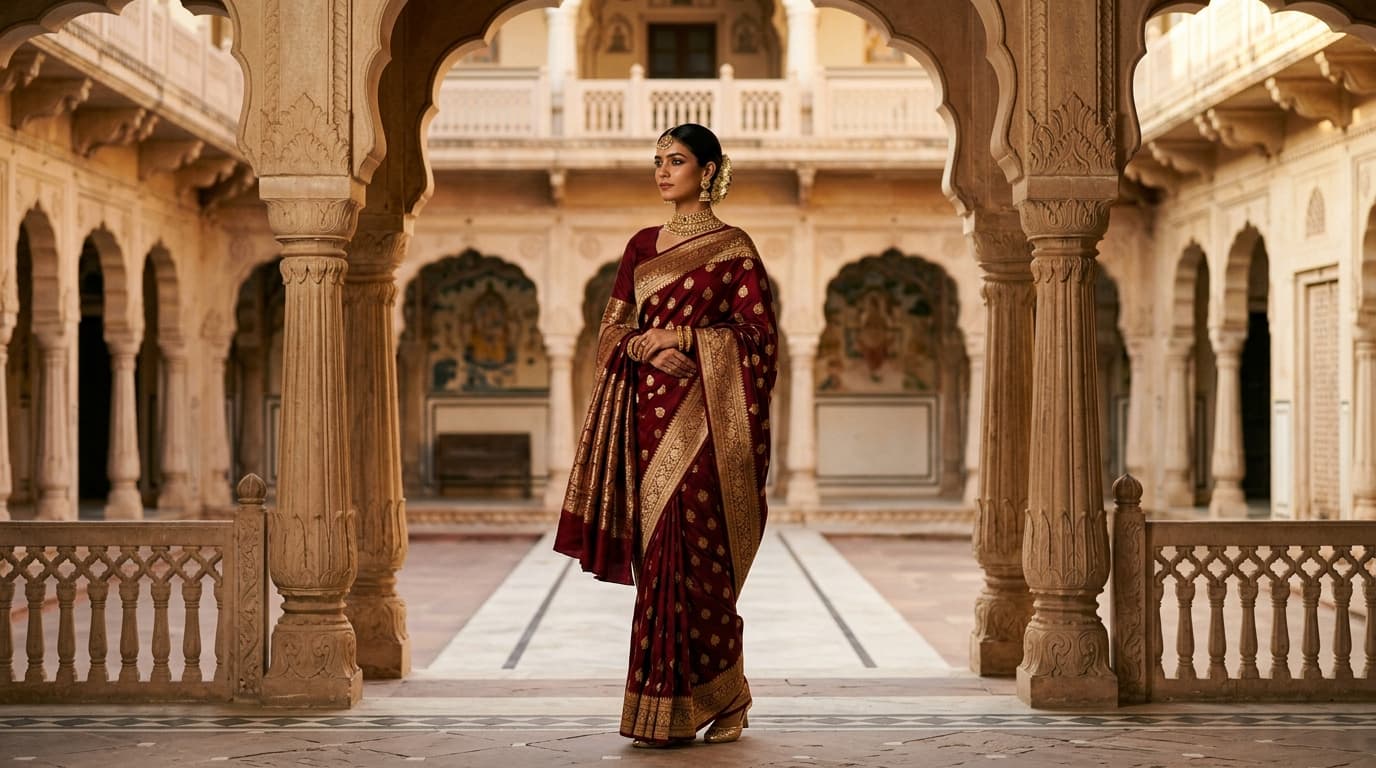
Woven in Tradition.
Draped in Grace.
AARANYA was conceived as an ode to the quiet nobility of Indian handloom traditions — where every warp and weft carries generations of human memory.
“A saree is not merely fabric; it is living architecture sculpted by the human hand.”
In a world dominated by disposable trends and synthetic prints, AARANYA stands for the eternal dignity of Indian handcraft. We revere the slow rhythm of the wooden pit loom, the patience of master drapers, and the irreplaceable aura of certified pure silks.
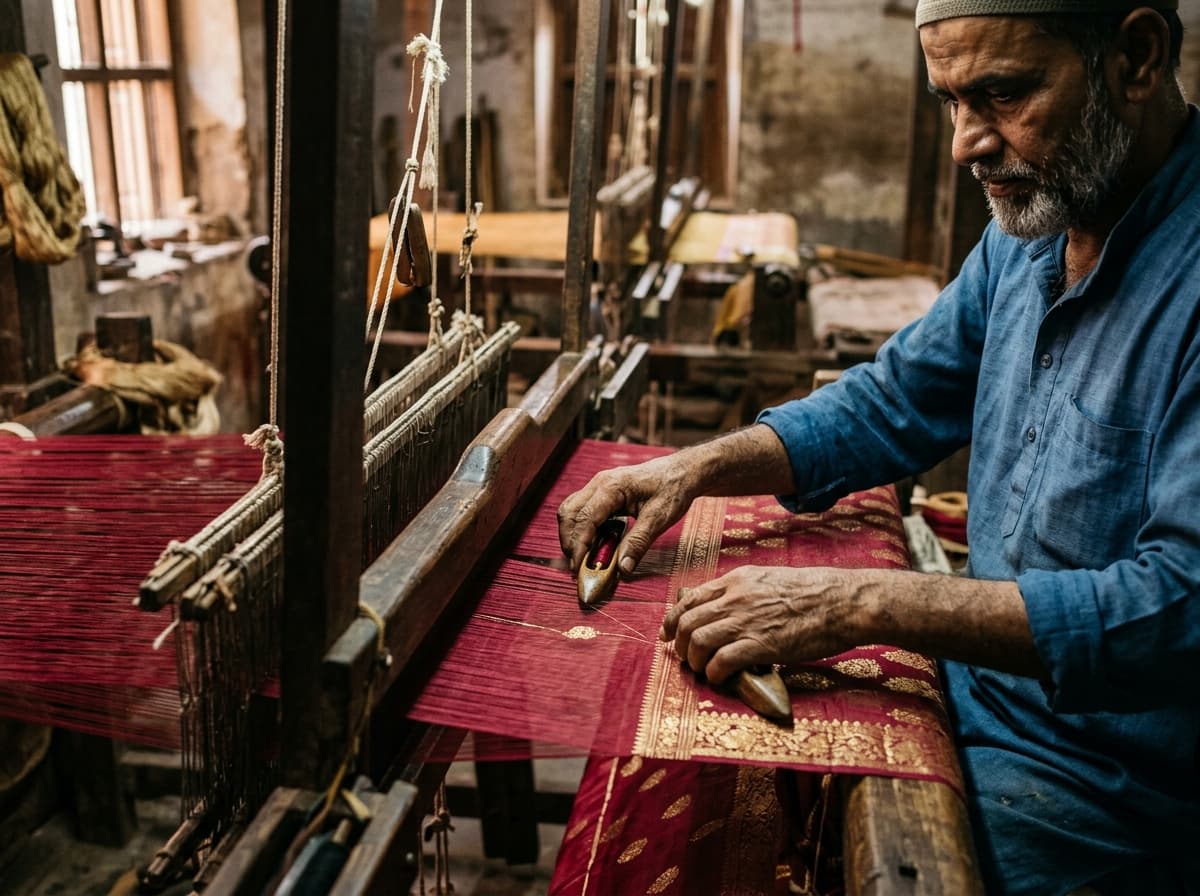
Authentic Craftsmanship, Never Mass-Produced
A single AARANYA bridal saree takes anywhere from 120 to 300 hours on a manual wooden loom. Two master artisans sit side by side, passing shuttles across thousands of silk warp threads.
The Great Weaving Clusters
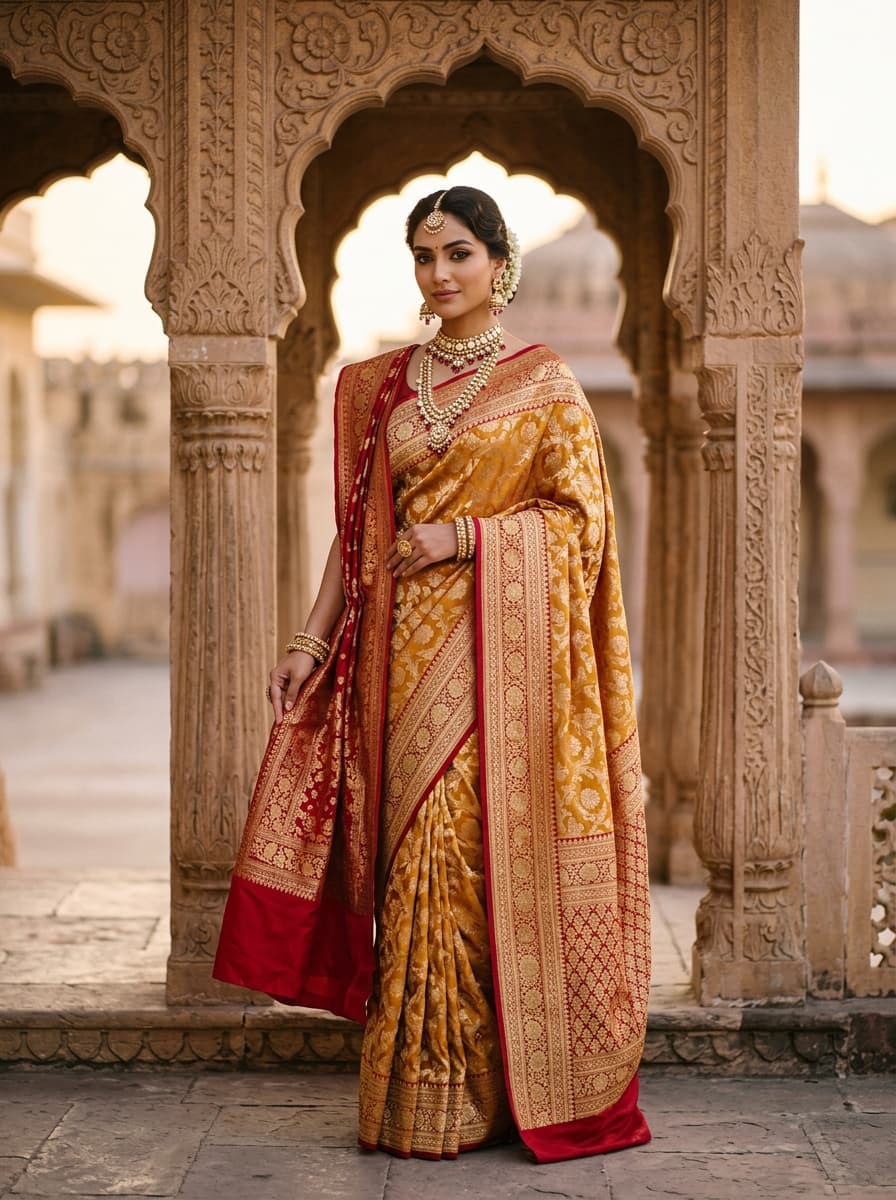
Kadwa Banarasi Brocade
Centuries of royal Mughal and Hindu court patronage. Master weavers hand-manipulate separate spools of pure gold zari to embroider motifs directly onto Mulberry silk without loose floating threads on the reverse.
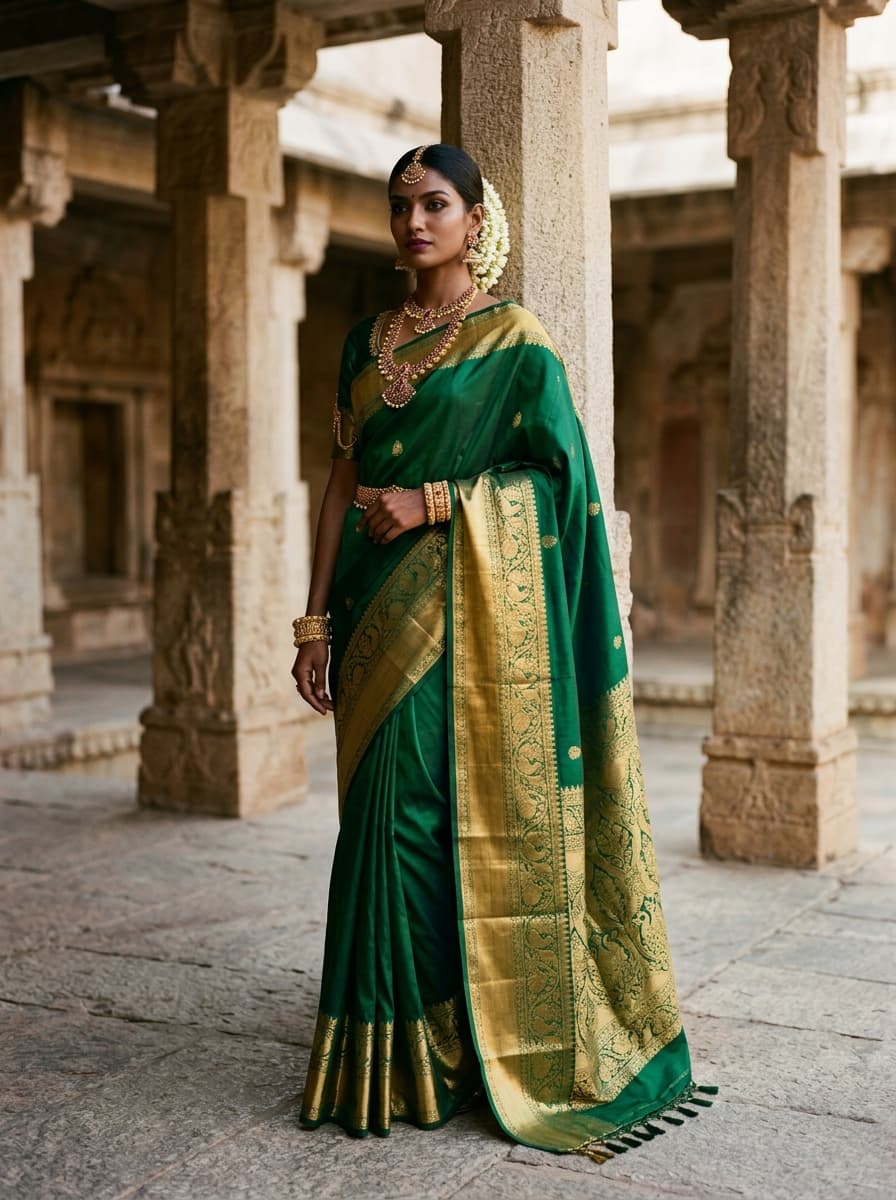
Korvai Temple Weave
Rooted in Dravidian temple architecture. The body and contrast borders are warped separately and interlocked by two weavers operating three shuttles simultaneously, yielding unmatched border strength and temple motifs.
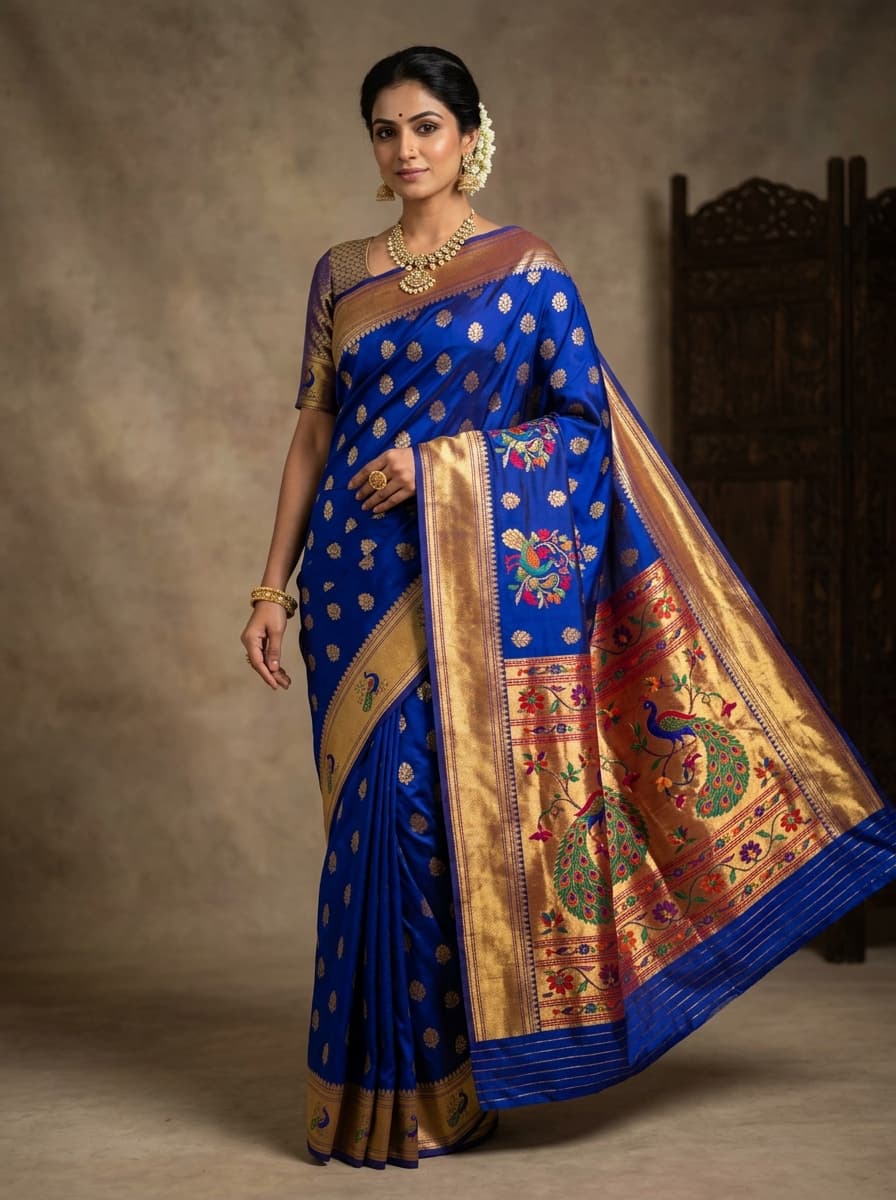
Peshwa Paithani Tapestry
Characterized by its oblique square borders and kaleidoscopic peacock (Mor-Bangadi) pallu woven with the ancient tapestry technique where weft threads of different colored silks are interlocked.
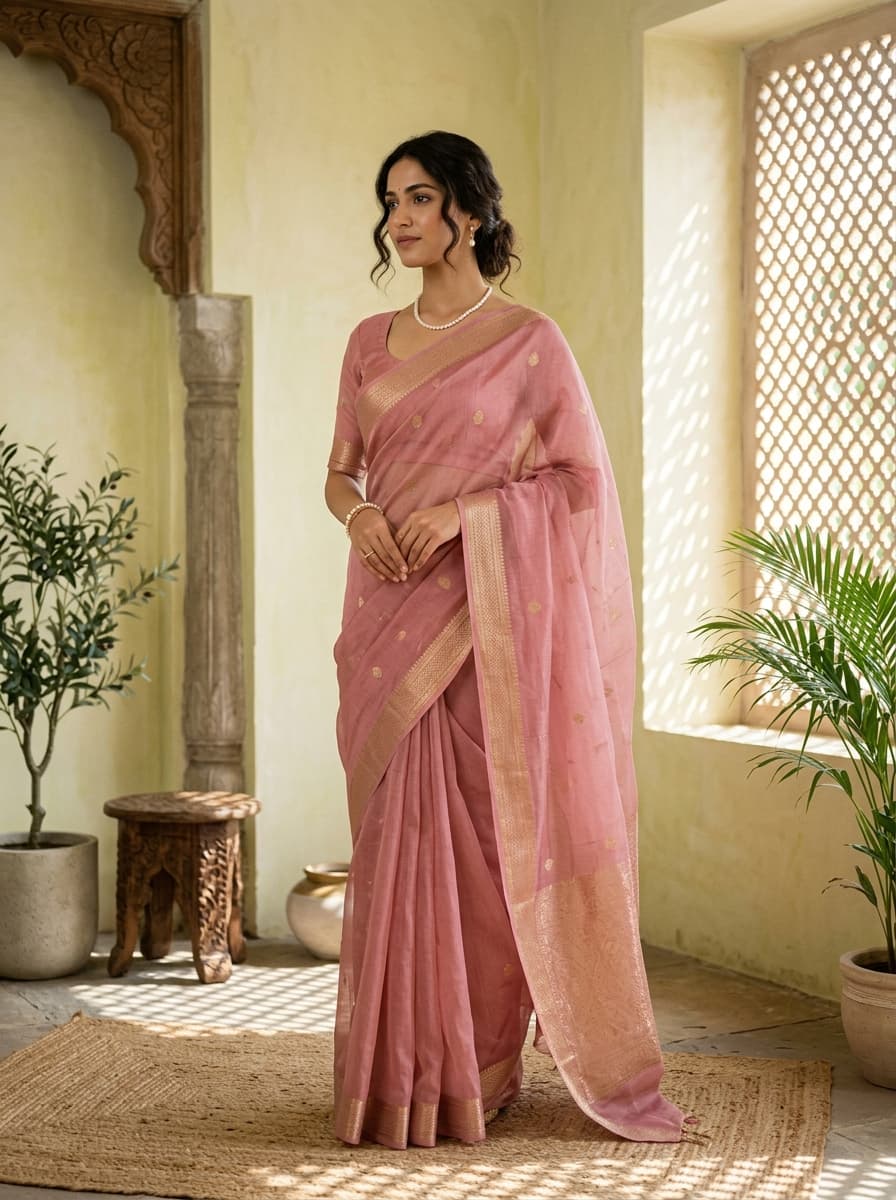
Gossamer Chanderi Silk Cotton
Woven from un-degummed raw silk and gossamer cotton yarns with fine ashrafi (coin) bootis. Renowned since Vedic times for its transparent, airy lightness and luminous sheen.
Caring for Pure Handloom Silks
1. Storage in Muslin
Always wrap pure silk sarees in breathable cotton or mulmul muslin. Avoid plastic covers which trap moisture and can damage metallic zari over time.
2. Periodic Airing
Every four to six months, unfold your sarees in a shaded room to prevent creases from breaking delicate silk warp yarns. Never dry under direct harsh sunlight.
3. Professional Dry Clean
Natural vegetable dyes and gold zari must only be dry cleaned by specialist heritage fabric cleaners. Avoid direct fragrance or alcohol sprays.